AXIOM MUSIC | INSTRUMENT ADVICE
How to Look After Your Violin Bow and Make It Last Longer
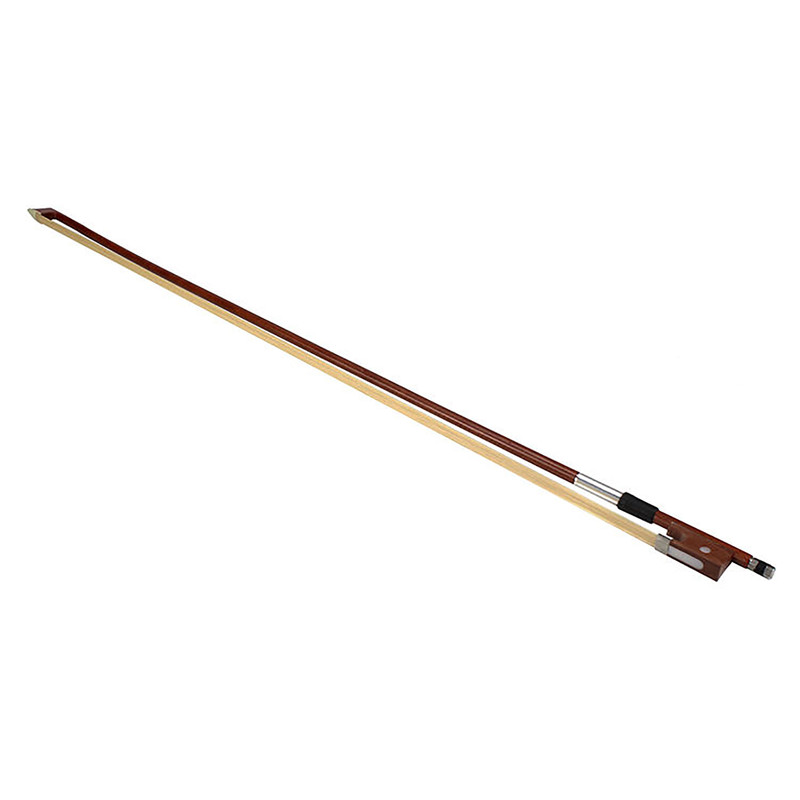
A violin bow is an essential part of the instrument's sound. Even a well-set-up violin can be difficult to play if the bow hair is poorly maintained or the stick is damaged. Fortunately, learning how to care for a violin bow involves a few simple habits that take very little time. Understanding how the bow works, using the right amount of tension and rosin, and storing it correctly can help keep it performing reliably. These habits are especially useful for beginners and parents helping children look after their instruments.
Understand the parts of your bow
A traditional bow consists of a flexible stick, a ribbon of hair, a frog at the lower end and a tip at the upper end. Turning the screw at the end of the stick moves the frog and changes the tension of the hair. The stick has a carefully formed curve, known as camber, which contributes to its playing characteristics. Bow sticks may be made from wood or synthetic materials such as carbon fibre. Many bows use horsehair, while some use synthetic hair. Although materials vary, the basic principles of careful handling and appropriate tension apply to all of them.
Tighten the bow only as much as necessary
Before playing, turn the screw gently until the hair is sufficiently tensioned to avoid collapsing against the stick under normal playing pressure. The stick should retain its inward curve. A pencil-width gap near the middle is sometimes used as a rough beginner guide, but the appropriate gap varies with the bow and playing conditions. Ask your teacher to demonstrate suitable tension for your particular bow. Never tighten until the stick becomes straight or bends outward. Excessive tension places unnecessary stress on the stick, hair and fittings. If the screw becomes difficult to turn, stop rather than forcing it.
Apply rosin sparingly and evenly
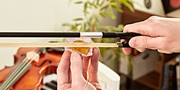
Rosin helps the bow hair grip and release the strings so that they vibrate. New, unrosined hair generally needs more initial preparation than hair that is already in use. Once the bow is playing normally, only a small amount of additional rosin is usually needed. Draw the hair gently along the rosin cake in controlled strokes, covering the usable length of the hair. Avoid striking the frog or tip against the cake. If the bow grips well and produces a clear sound, there is no need to add more simply because you are starting another practice session. Excess rosin creates dust and can contribute to a scratchy response.
Keep fingers away from the hair
Natural oils and perspiration from your fingers can contaminate bow hair and interfere with its grip on the strings. Hold the bow by the stick and frog when handling it away from the instrument. Avoid testing the hair by rubbing it between your fingers. If a child is learning, explain that the hair is a working surface rather than something to touch or pull. A single accidental touch is not a disaster, but repeated handling can make the hair less reliable. If the hair becomes badly contaminated, seek professional advice instead of attempting to wash it with household products.
Remove rosin dust after playing
Use a clean, soft, dry cloth to gently wipe rosin dust from the stick, taking care not to catch or pull the hair. Pay attention to the area near the frog, where dust can accumulate. Avoid using alcohol, furniture polish or household cleaning sprays, which may damage finishes or fittings. Keep a separate cloth for wiping the violin strings and body so that accumulated rosin does not simply transfer between surfaces. A quick wipe after practice is easier than removing a thick buildup later. If residue cannot be removed with gentle dry wiping, ask a repairer about a suitable cleaning method.
Always loosen the bow before putting it away
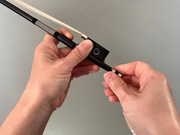
After playing, turn the screw in the opposite direction until the hair is relaxed and the stick is no longer under playing tension. Do not loosen so far that the frog becomes detached or the hair hangs in a tangled loop. Leaving a bow tightened for extended periods can place unnecessary stress on its components and may affect the shape of a wooden stick over time. Make loosening the bow part of the same routine as wiping the violin and closing its case. This simple habit is one of the most important things a beginner can learn about bow maintenance.
Protect the bow during storage and transport
Place the bow in its dedicated holder inside the violin case and secure it according to the case design. Check that the tip and frog are safely positioned and that the bow cannot move around or strike the violin when the case is closed. Avoid leaving it on a chair, music stand or floor, where someone may accidentally sit on it or knock it over. Keep the case away from heaters, direct sunlight and hot vehicles. Changes in humidity can affect hair length, so check the tension each time you play rather than assuming yesterday's adjustment is still correct.
Know when to seek professional help
A few broken hairs over time are normal. If one breaks, carefully trim it near its ends rather than pulling it out of the frog or tip. Large gaps in the ribbon, persistent poor grip despite suitable rosin, a damaged tip or a screw that no longer works smoothly may indicate that professional attention is needed. A repairer can assess whether rehairing is worthwhile or whether replacement is more economical for an inexpensive student bow. Never attempt to straighten a warped stick by heating or bending it yourself. With sensible care, a good bow can remain a dependable part of your musical routine.
Axiom Music | Helping Australians enjoy making music.