AXIOM MUSIC | INSTRUMENT ADVICE
How to Clean an Electric Guitar Without Damaging It
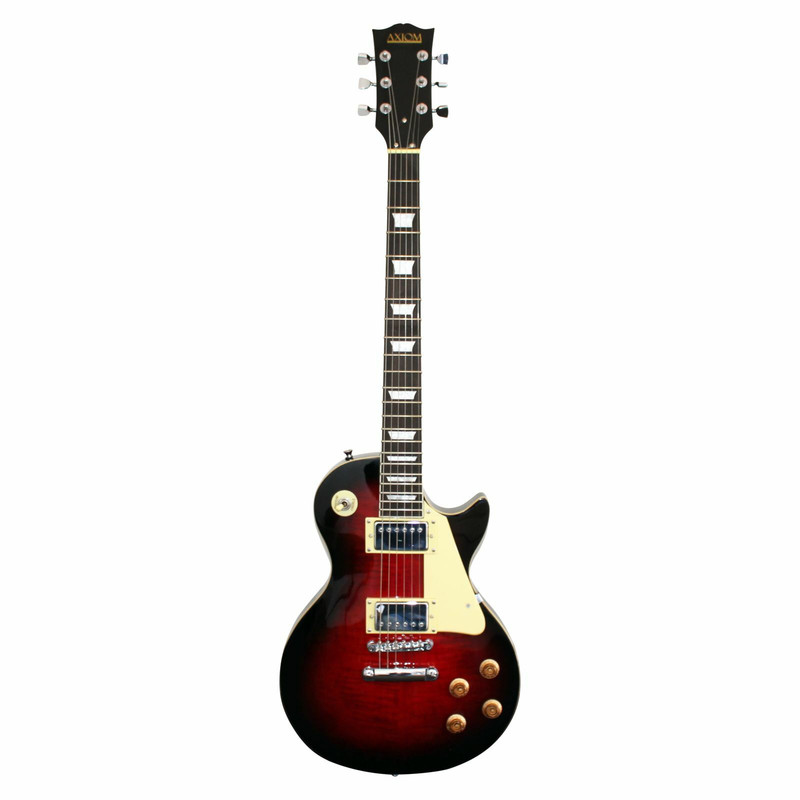
A safe, step-by-step guide to cleaning an electric guitar body, fretboard, strings and hardware without harming its finish or electronics.
Why regular cleaning makes a difference
An electric guitar collects fingerprints, dust, skin oils and perspiration whenever it is handled. These deposits can dull the finish, leave grime around frets and bridge saddles, and encourage corrosion on exposed metal parts. Cleaning is not only about appearance: a clean instrument is more pleasant to play and easier to inspect for loose hardware or developing wear. The safest approach is gentle and consistent. A quick wipe after each session usually does more good than an occasional aggressive clean with unsuitable chemicals.
Gather the right supplies
Start with two clean, soft microfibre cloths: one for wiping away dust and one for finishing. A soft brush can help lift dry debris from hard-to-reach areas. For stubborn marks, use a small amount of guitar-specific cleaner that is explicitly compatible with your instrument's finish. Different guitars may have polyurethane, polyester, nitrocellulose lacquer, oil or other finishes, and products suitable for one may be wrong for another. If you are uncertain about the finish, use a dry cloth first and consult the maker's guidance before applying any liquid.
Clean the body gently
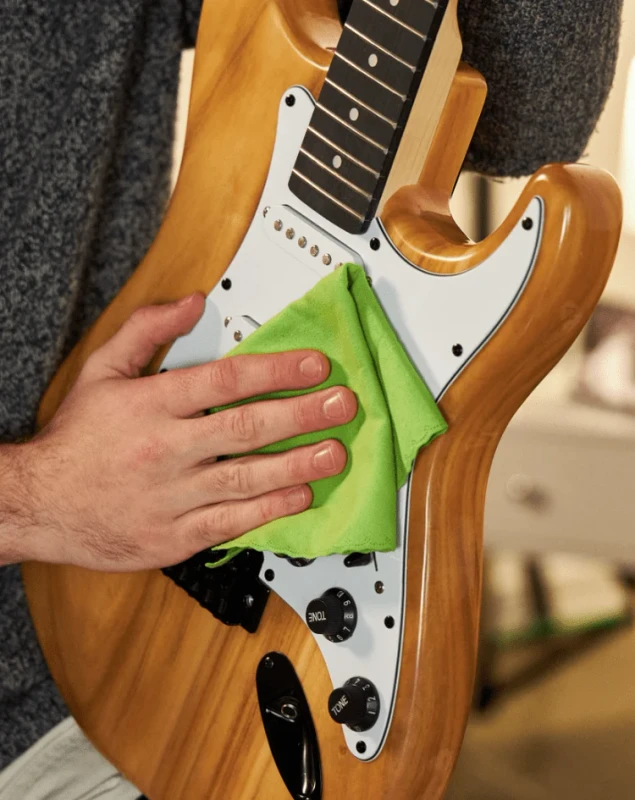
Unplug the guitar before cleaning. Support it securely on a stable, padded surface and remove loose dust with a dry microfibre cloth. Wipe fingerprints using light pressure rather than rubbing one spot aggressively. If a mark remains, apply a suitable cleaner to the cloth, not directly to the guitar, and test it in an inconspicuous place. Keep liquid away from pickup openings, switches, control shafts and output jacks. Never soak the body or allow cleaner to pool around the bridge. Finish by buffing gently with a separate clean cloth.
Care for the strings and fretboard
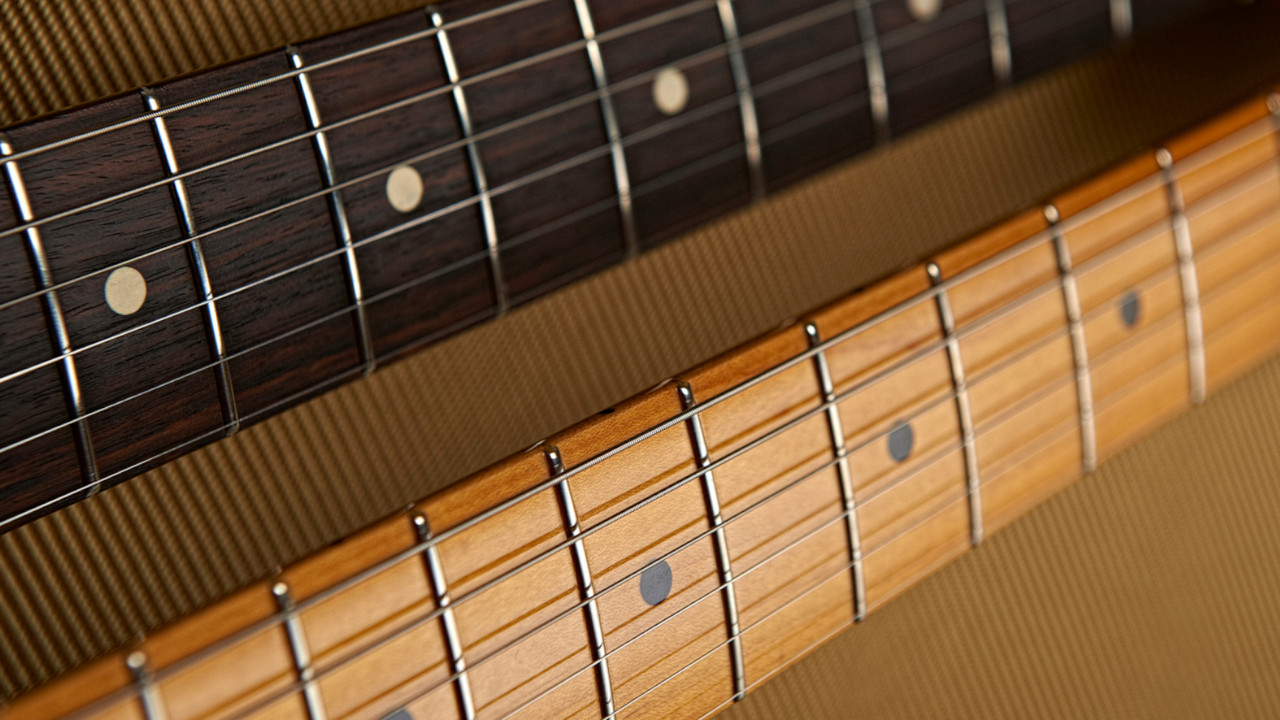
After playing, wipe the strings with a clean, dry cloth to remove sweat and oils. When changing strings, take the opportunity to clean accessible areas of the fretboard and around the frets. The correct treatment depends on the fingerboard material and finish. An unfinished rosewood-type board may occasionally benefit from a suitable conditioner, but a finished maple fingerboard should generally be cleaned according to the manufacturer's instructions and should not be oiled indiscriminately. Avoid soaking any fingerboard, and do not scrape grime away with metal tools.
Take care around pickups and electronics
Electric guitar pickups, selector switches, volume and tone controls, and output jacks should stay dry. Dust around pickup covers can usually be removed with a dry cloth or a soft brush. Do not spray household cleaning products into the controls or pickup cavities. If a control crackles or a jack cuts out, the cause may be electrical rather than cosmetic. Specialist contact cleaners can be appropriate in some situations, but using the wrong product or spraying indiscriminately can cause damage. A qualified technician can diagnose persistent electrical problems safely.
Bridge, tuners and exposed metal parts
Bridges, saddles and tuning machines have small crevices where dust and perspiration accumulate. Use a dry cloth and a soft brush to remove loose grime without changing the position of adjustment screws. Avoid turning saddle-height or intonation screws unless you are deliberately carrying out a setup. On instruments with a tremolo system, do not dismantle the bridge just to clean its surface. If corrosion has become substantial, or a screw appears seized, seek advice before using abrasive polish. Some plated finishes can be scratched or worn away by harsh treatment.
Cleaning mistakes to avoid
Avoid abrasive pads, furniture polish, bleach, strong solvents and general-purpose household sprays. Products containing silicone or wax may leave residues that complicate future repairs or refinishing. Excessive moisture can reach electronics and unfinished wood. Do not use paper towels on delicate glossy finishes if they may scratch, and never apply fretboard oil without first checking the board's material and finish. A clean cloth, careful technique and the right product for the specific guitar are more important than a large collection of cleaning chemicals.
A practical maintenance schedule
After each playing session, wipe the strings, neck and areas touched by your hands. Every few weeks, inspect the body and hardware for accumulated dust and clean gently as needed. At string-changing time, give the fretboard and bridge a more thorough but still careful clean. Store the guitar away from excessive heat, moisture and direct sunlight, preferably in a suitable case when it will not be used for a while. If you notice buzzing, unstable tuning, crackling controls or loose hardware, cleaning alone may not solve the problem; a professional setup or repair may be appropriate.
Before and after a string change
String changes are a convenient opportunity to check the instrument without disturbing its setup. Take a photograph of the bridge and string arrangement before removing anything, especially if the guitar has a tremolo system. Replace strings using the manufacturer's recommended procedure, and avoid leaving a floating bridge unsupported if that could alter its position. Clean reachable surfaces gently while the strings are off, then check that no cloth fibres remain around saddles or pickups. Once restrung, tune gradually, inspect the string path and wipe away fingerprints. If the guitar feels substantially different afterward, have its setup checked rather than adjusting several screws at random.
Axiom Music is an Australian family-owned musical instrument retailer, shipping from Sydney. Explore our instrument range and practical care advice on our website.