Why Do Trumpet Valves Stick? Causes and Easy Fixes
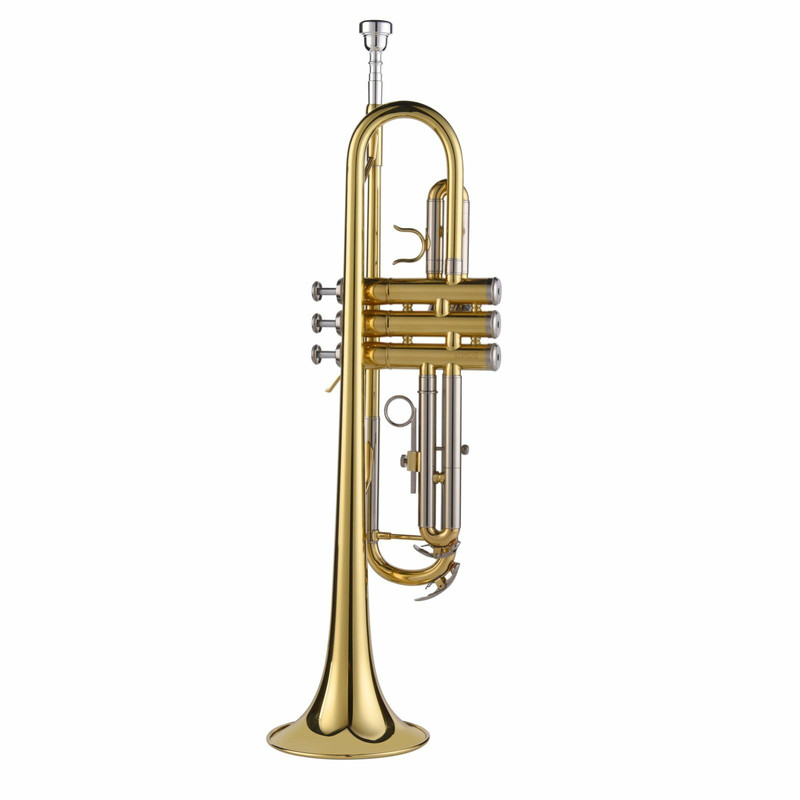
A trumpet should respond the moment you press a valve. When a piston hesitates, stays down or returns slowly, it can interrupt a phrase and make even familiar notes difficult to play. The good news is that many cases of sluggish action are caused by ordinary maintenance issues rather than serious damage.
The key is to identify the cause before forcing anything. The checks below are suitable for everyday care of a piston-valve trumpet, including student instruments used at home and in school bands.
What makes trumpet valves stick?
Trumpet pistons fit closely inside their valve casings. A very thin film of purpose-made valve oil allows them to move quickly and smoothly. When that film wears away, friction increases. Dried saliva deposits, dust, old lubricant and handling residue can also build up on the piston surface.
A valve may also stick because its guide has not engaged correctly after cleaning, a cap has been cross-threaded, or the piston has been returned to the wrong casing. Less commonly, a small dent, bent piston or damaged guide is responsible. Oil can help with friction, but it cannot correct mechanical damage.
A quick check before you add oil
Press each valve separately and observe whether it returns promptly. If only one is slow, note which valve it is. Check that the top and bottom caps are seated normally, without tightening them excessively. If the problem began immediately after a valve was removed, incorrect alignment is worth checking first.
Never press harder to overcome resistance. Forcing a stuck piston can damage its surface or the guide. If it will not move easily, stop and ask a teacher or brass repairer for help.
How to oil trumpet valves safely
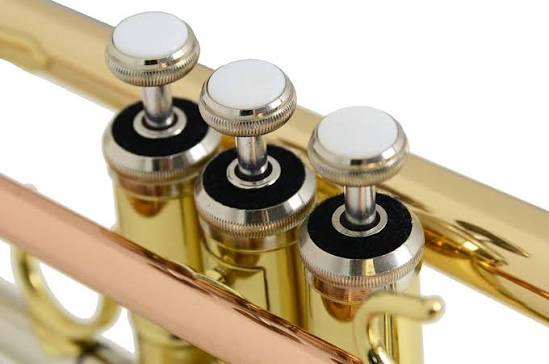
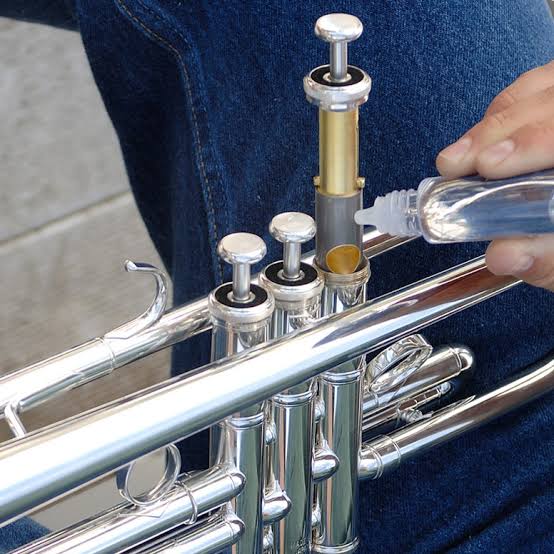
Place the trumpet on a secure surface or hold it carefully. Work on one piston at a time so the parts do not become mixed up. Unscrew the top valve cap and lift the piston just enough to expose a substantial section of the smooth metal surface, keeping it aligned with its original casing.
Apply a few drops of dedicated trumpet piston-valve oil around the exposed piston. Lower it gently and rotate only as needed for the valve guide to engage its slot. You may feel or hear a light click. Screw the cap back on without overtightening, then press the valve several times to distribute the oil.
Test the instrument by playing a few notes. If a note suddenly sounds blocked after reassembly, the piston may not be aligned correctly. Do not force it; recheck the guide and valve orientation or seek assistance.
How often should you oil the valves?
There is no universal schedule because use, climate and oil formulation vary. A student playing every day may need to oil the valves every few days, while an instrument that has been stored may need attention before its next session. The best indicator is how freely the pistons move.
Use a small amount of the correct lubricant rather than flooding the casing. Avoid cooking oil, general-purpose household lubricants and other substitutes. If switching between different valve-oil formulations, follow the manufacturer's advice about cleaning away the old product.
Cleaning habits that prevent problems
After playing, empty moisture from the water keys and wipe fingerprints from the outside with a soft cloth. Keep the mouthpiece clean and avoid eating immediately before playing. For a more thorough periodic clean, follow the trumpet maker's instructions, including any precautions for felts, springs and finishes.
A dirty piston can be gently wiped with a clean, lint-free cloth when removed for routine care. Do not use abrasive pads or metal polish on the piston surface: even tiny scratches can affect the close fit. Reassemble one valve before moving to the next.
When a brass technician is the right answer
If a piston repeatedly catches at the same point, will not align, feels gritty after cleaning, or stays stuck despite correct lubrication, professional inspection is sensible. The same applies after a knock or fall. A technician can check the casing, guide and piston fit without risking further damage.
For most players, the simple routine is: identify the slow valve, oil it correctly, confirm alignment and test gently. Regular care takes only a few minutes and helps keep practice sessions focused on music rather than mechanics.