
How to Use a Metronome for Beginners: A Simple Practice Guide
Author: Axiom Music Date Posted:20 October 2026
How to Use a Metronome for Beginners: A Simple Practice Guide
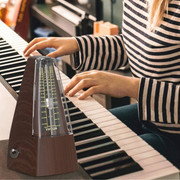
The short answer
A metronome gives you a regular click to help you keep a steady beat. Set a comfortable tempo, listen for a few clicks, count aloud and play a simple exercise in time. Start slowly enough that you can play accurately; increase the speed only after you can repeat the passage comfortably.
What does BPM mean?
BPM stands for beats per minute. At 60 BPM, the metronome clicks once per second. At 120 BPM, it clicks twice per second. A slower setting gives you more time between beats, making it easier to focus on timing and note changes.
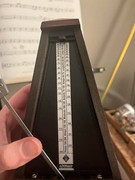
1. Choose a comfortable starting tempo
Try 60 BPM for a simple exercise, but do not treat that as a rule. Some beginners need a slower tempo; others find 70 or 80 BPM easier to follow. The right tempo is the one at which you can play cleanly and stay with the click.
2. Listen, count and clap first
Before playing your instrument, listen to four clicks. Count one, two, three, four with each click. Then clap once per beat. This separates the challenge of keeping time from the challenge of playing notes.
3. Play one note on each click
Choose an easy note or chord. Play once per click for eight or sixteen beats, listening carefully to whether your sound lands with the metronome. If you rush ahead or fall behind, slow the tempo and try again. Aim for consistency rather than speed.
4. Practise subdivisions
Once you can play one note per beat, try two evenly spaced notes per click. These are eighth-note subdivisions when the click represents a quarter-note beat. Count 'one-and, two-and, three-and, four-and'. Keep the 'and' exactly halfway between the clicks.
5. Increase the tempo gradually
After you can play a passage correctly several times in a row, raise the tempo by around 4 to 8 BPM and repeat. If accuracy suffers, return to the previous speed. Small, controlled increases build reliable technique more effectively than repeatedly attempting full speed.
A five-minute metronome routine
Minute 1: Listen and clap with the click.
Minute 2: Count four beats aloud while clapping.
Minute 3: Play one easy note or chord per beat.
Minute 4: Play two evenly spaced notes per beat, if comfortable.
Minute 5: Repeat a short passage slowly and accurately. Write down the tempo you achieved.
Mechanical or electronic metronome?
A mechanical metronome offers a visible swinging pendulum and an audible tick without needing a screen. An electronic metronome or app may offer more tempo choices, accent patterns and volume controls. Either can help: the best option is one you will use regularly.
Frequently asked questions
Should beginners always practise with a metronome? No. It is a useful tool for developing timing, but also spend time listening to musical phrasing and playing freely.
What if I cannot follow the click? Clap or tap first, choose a slower tempo and use very short exercises.
Does a metronome work for violin, guitar and piano? Yes. It is useful for nearly every instrument and for singers.
Build a habit
Just a few minutes of focused timing practice can improve your sense of pulse. For more beginner instruments and accessories, visit Axiom Music.

Shop Now. Pay Later.
100% Interest-free.
Simple instalment plans available instantly at checkout
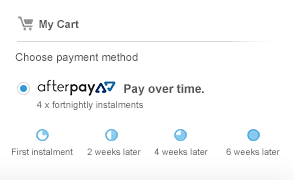

Select Afterpay as your payment method
Use your existing debit or credit card

Complete your checkout in seconds
No long forms, instant approval online

Pay over 4 equal instalments
Pay fortnightly, enjoy your purchase straight away!
All your need is:
1) An Australian Visa or Mastercard debit/credit card; 2) To be over 18 years of age; 3) To live in Australia
To see Afterpay's complete terms, visit https://www.afterpay.com.au/terms
© 2026 Afterpay